Hopkins Auto Body 1 Explains Bumper Repair Decisions After a Low-Speed Crash
Hopkins, MN - October 07, 2026 - PRESSADVANTAGE - Hopkins Auto Body 1 is publishing consumer guidance that gives
Press Release Disclaimer: This is a press release distributed through the XPR Media network. It has not been independently verified by our newsroom.

Hopkins, MN – October 07, 2026 – PRESSADVANTAGE –
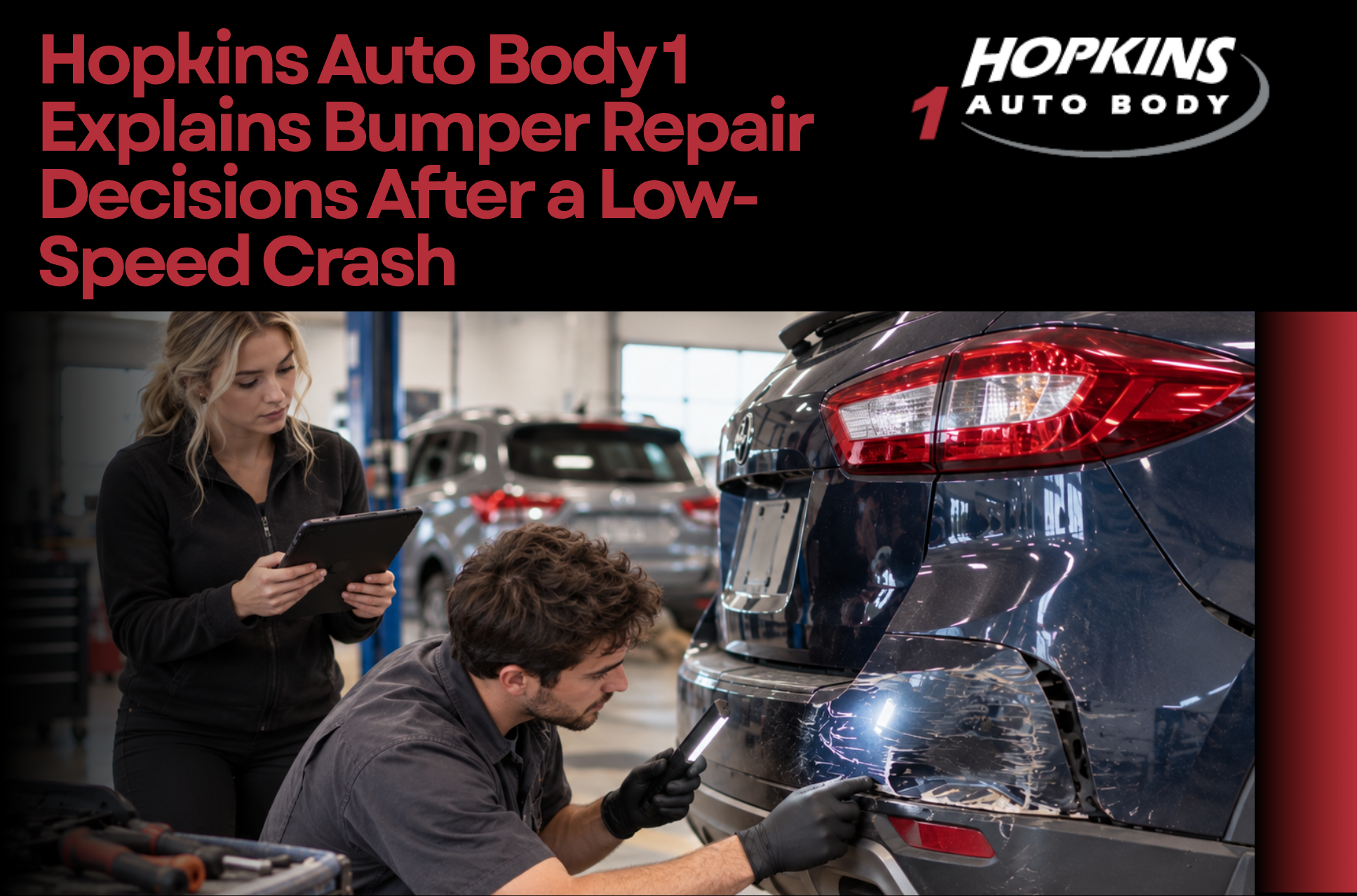
Hopkins Auto Body 1 is publishing consumer guidance that gives drivers a clearer framework for understanding bumper repair decisions after a low-speed collision. The October resource focuses on four factors that can influence whether a bumper cover is repaired or replaced: the type and location of the damage, the condition of mounting components, equipment behind the bumper, and repair requirements for the specific vehicle.
The guidance addresses a common challenge after parking lot impacts, light rear-end collisions, and other low-speed crashes. A bumper may show only a scrape, crack, dent, or displaced edge, but appearance alone does not determine the appropriate repair method.
Hopkins Auto Body 1 operates as part of Collision Center 1 and serves as its local Hopkins repair facility. Information about the shop is available on the Hopkins Auto Body 1 location page.
The first part of the October guidance focuses on the bumper cover itself. Limited surface damage can present a different repair situation from a tear, puncture, significant deformation, or damage around an attachment point. Technicians can evaluate the material, location, and extent of the damage to determine whether an appropriate repair method applies.
Damage location can be particularly important. A damaged section in the middle of an accessible bumper cover may present different considerations from damage around mounting tabs, edges, lamp openings, sensor locations, or areas where the cover connects with surrounding components.
The second factor is how the bumper remains attached to the vehicle. A bumper cover can sometimes return close to its original shape after an impact even though a clip, bracket, tab, or retainer has been damaged.
Uneven gaps, loose edges, or sections that no longer fit correctly against adjoining panels can indicate that attachment components also need evaluation. This does not automatically require replacing the entire bumper cover. The repair plan depends on which components were actually affected.
The third part of the guidance addresses components behind and around the visible cover. Depending on the vehicle, a bumper assembly can contain reinforcement components, absorbers, wiring, lamps, brackets, sensors, and other equipment.
A low-speed collision does not automatically damage these components. Likewise, limited exterior damage does not establish that everything behind the cover remains unaffected. Inspection of the relevant area provides the basis for distinguishing between those situations.
Modern vehicle technology makes this evaluation increasingly vehicle-specific. Some bumper areas contain parking sensors, cameras, radar equipment, wiring, or other components associated with driver-assistance and convenience features.
When this equipment is present, repair planning can account for its location and any applicable procedures associated with removal, installation, replacement, refinishing, or work around the component. The absence of a dashboard warning does not by itself determine which procedures apply.
These considerations are incorporated into the auto body repair process available through Collision Center 1.
The fourth factor is whether the documented condition falls within the repair procedures applicable to the particular bumper and vehicle. Small scratches may primarily require surface preparation and refinishing, while deeper gouges, cracks, deformation, or damage in certain locations can require a different approach.
The objective is not to favor repair or replacement as a general rule. Instead, the October guidance emphasizes choosing the method that fits the condition of the component and the requirements associated with the vehicle.
Replacement can also involve more than installing a new bumper cover. Depending on the configuration, a replacement component may require preparation and refinishing, while trim, grilles, lamps, brackets, sensors, or other equipment may need to be transferred or installed.
If the original bumper is repairable, the work can involve restoring the damaged material, preparing the surface, refinishing the repaired area, and checking fit during reassembly. These steps connect the initial repair decision with the broader collision repair process.
The October resource also addresses the role of cost. Repair price is relevant to drivers and insurers, but cost alone does not determine whether a damaged bumper should be repaired or replaced. A less expensive repair is not necessarily appropriate for every type or location of damage, while visible damage does not automatically make replacement necessary.
For consumers, the guidance reduces the decision to four practical questions: what part of the bumper was damaged, whether its mounting points and related components were affected, what equipment is located in the repair area, and what repair procedures apply to the individual vehicle.
This framework is intended to help drivers understand why two bumpers with similar-looking exterior damage can result in different repair plans. The condition of the actual components provides more useful information than the apparent speed of the collision or the size of the visible mark.
Hopkins Auto Body 1 is located at 10889 Excelsior Blvd, Hopkins, MN 55343. The facility operates as part of Collision Center 1 and provides auto body and collision repair services for Hopkins-area drivers.
###
For more information about Hopkins Auto Body 1, contact the company here:
Hopkins Auto Body 1
Jerald Stiele
(952) 935-7556
kburke@collisioncenter1.com
10889 Excelsior Blvd, Hopkins, MN 55343