
What Defines a Low Dew Point Dry Room Dehumidifier from China? Dryair on Air Distribution and Room Envelope Design
HANGZHOU, ZHEJIANG, CHINA, November 27, 2026 /EINPresswire.com/ -- In ultra-dry manufacturing environments such as
Press Release Disclaimer: This is a press release distributed through the XPR Media network. It has not been independently verified by our newsroom.
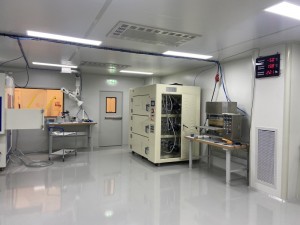

HANGZHOU, ZHEJIANG, CHINA, November 27, 2026 /EINPresswire.com/ — In ultra-dry manufacturing environments such as lithium-ion battery production and specialty pharmaceutical processing, achieving a stable low dew point depends on the controlled architectural boundary and air-distribution path as much as the internal capacity of the dehumidification equipment itself. Evaluating a Low Dew Point Dry Room Dehumidifier From China requires examining how Dryair integrates advanced desiccant technology with prefabricated room-envelope construction, specialized ceiling supply systems, low-level return air paths, and integrated cooling systems to maintain rigorous moisture targets.
What Makes the Room Envelope Part of Dehumidifier Performance?
In ultra-dry facility design, an industrial dry-room envelope is defined as an airtight, vapor-impermeable containment barrier engineered to isolate the controlled manufacturing space from external ambient moisture migration. The performance of an industrial dry room dehumidifier is fundamentally bounded by the enclosure that surrounds the controlled space. Even the most efficient desiccant system cannot maintain low-dew-point conditions if external moisture continuously migrates across the room boundary through unsealed joints, permeable materials, or unmanaged personnel access points.
Dryair addresses this challenge by treating the dry-room envelope as an active environmental barrier. The room construction utilizes prefabricated pre-painted steel sandwich panels insulated with high-density polyurethane foam, available in 50 mm, 75 mm, and 100 mm thicknesses. These panels are engineered with tight interlocking joints designed to minimize vapor transmission. In addition, the envelope integrates transition airlocks, specialized personnel vestibules, and sealed utility penetrations to isolate the dry production zone from ambient moisture loads. When sizing a dry room dehumidifier, engineers must evaluate envelope integrity, panel thickness, and airlock protocols as primary variables determining total moisture infiltration.
How Should Dry Air Be Distributed Through the Room?
Supplying dry air into a large industrial space requires a carefully engineered distribution pattern to ensure uniform conditions across the entire working plane. Discharging dry air from localized duct drops or high-velocity diffusers can cause short-circuiting, dead zones, and localized moisture accumulation around machinery.
Dryair’s turnkey dry-room architecture utilizes a downward laminar or semi-laminar airflow pattern. Conditioned dry air is introduced through metal perforated ceiling modules that cover the operational ceiling area. This configuration distributes dry air uniformly downward through the occupied zone, creating a continuous wash of dry air over moisture-sensitive production processes. Air is then collected through return grilles positioned low on room perimeter walls or structural columns. Connecting these ceiling modules and return grilles with airtight galvanized or stainless-steel ductwork ensures that conditioned air sweeps the entire active process volume before returning for moisture extraction.
Why Does Return-Air Placement Matter?
Return-air placement governs how effectively the entire room participates in the circulation path. Placing return grilles near the ceiling or adjacent to supply points allows conditioned air to bypass the active process height, leaving stagnant pockets where equipment, material handling, or personnel release moisture. By positioning return grilles at floor level or low on support columns, Dryair forces the dry air to traverse the vertical working height from top to bottom. This ensures that internal moisture gains generated by operators and machinery are captured immediately and swept into the return ductwork before they can elevate the room’s ambient dew point.
How Does the Envelope Connect With Low-Dew-Point Equipment?
The physical interface between the room envelope and the dehumidification machinery is where theoretical design meets operational reality. A dry room dehumidifier cannot maintain room targets if duct connections, wall penetrations, or access points introduce ambient air into the treated stream.
Dryair’s ZCH dry-room engineering integrates the low-dew-point desiccant unit directly with the room infrastructure. The installation incorporates insulated supply and return duct systems designed for low leakage, sealed wall penetrations, transitional airlocks for material and personnel movement, and continuous self-leveling epoxy flooring. This coordinated design prevents uncontrolled air infiltration at duct-to-wall interfaces. Because the desiccant rotor can only remove the moisture load for which it was sized, eliminating unplanned infiltration across these interfaces is essential for sustaining a room dew point of -40°C to -50°C under continuous plant operation.
Where Does Cooling Fit Into the Dry-Room Air Path?
Cooling is a critical partner to the desiccant dehumidifier, but its function must not be confused with chemical adsorption. While cooling coils condense bulk moisture from ambient air at elevated temperatures, they cannot achieve the sub-zero dew points required in advanced battery production.
In Dryair’s turnkey dry-room systems, cooling is integrated through direct-expansion (DX) refrigeration or chilled-water coils positioned strategically along the air-handling path. Pre-cooling coils reduce entering air temperature and condense upstream moisture, thereby presenting a cooler, denser air stream to the desiccant rotor to optimize adsorption efficiency. Downstream post-cooling coils temper the dry air after it leaves the desiccant rotor, removing the heat of adsorption and fan heat to deliver supply air at the precise dry-bulb temperature required by the process. Incorporating chillers, water pumps, and cooling coils into the primary equipment package ensures that temperature and moisture removal are controlled as related yet distinct thermodynamic processes.
Which Room Inputs Should Be Coordinated Before Design Starts?
Before selecting equipment models or finalizing duct layouts, project teams and equipment manufacturers must establish a comprehensive design brief. Sizing a dry room dehumidifier system requires coordinating the following operational parameters:
Required room dew point and dry-bulb temperature across all seasonal conditions.
Room physical dimensions, ceiling height, and layout of production machinery.
Number of active personnel and standard operating shift schedules.
Frequency and duration of door openings, airlock cycles, and material transfer passes.
Available site utilities, including chilled water, cooling water, steam, and electrical capacity.
External static pressure constraints associated with duct routing and filtration stages.
Identification of any internal heat-generating or moisture-producing process steps.
Coordinating these parameters early ensures that the desiccant rotor capacity, fan static pressure, cooling coil surface area, and envelope construction are balanced against the facility’s actual operational demands.
What Should Commissioning Demonstrate?
Commissioning is the definitive validation that the dry room dehumidifier, envelope, ductwork, and cooling subsystems perform as a unified environmental control system. Factory acceptance tests and catalog ratings demonstrate component capability, but on-site commissioning must prove system stability under actual facility conditions.
During commissioning, technical teams should verify room dew-point stability, vertical and horizontal temperature uniformity, airlock pressurization gradients, and control-loop response times under simulated full-load operations. Defining clear acceptance criteria-including sensor placement, measurement duration, and operating envelope boundaries-ensures that the installation satisfies the engineering specification.
This integrated engineering approach is substantiated by demanding project installations. In an ultra-dry room installation engineered for Nanotek, Dryair integrated prefabricated 100 mm PU panel envelopes, continuous epoxy flooring, and dedicated ceiling distribution modules to maintain an operational room dew point of Td ≤ -40°C for advanced nanomaterial production, proving that envelope sealing and airflow aerodynamics are indispensable to equipment performance. By combining advanced ZCH desiccant dehumidifiers with engineered panel envelopes, laminar ceiling distribution, and integrated cooling systems, Dryair provides a comprehensive engineering route for demanding low-dew-point projects. To discuss technical specifications or request an engineering review, visit the Dryair official website.
Dryair
Dryair
email us here
Legal Disclaimer:
EIN Presswire provides this news content “as is” without warranty of any kind. We do not accept any responsibility or liability
for the accuracy, content, images, videos, licenses, completeness, legality, or reliability of the information contained in this
article. If you have any complaints or copyright issues related to this article, kindly contact the author above.

Media gallery
